-
MenuBack
-
Chairs
-
-
CHAIRSGaming
-
-
-
-
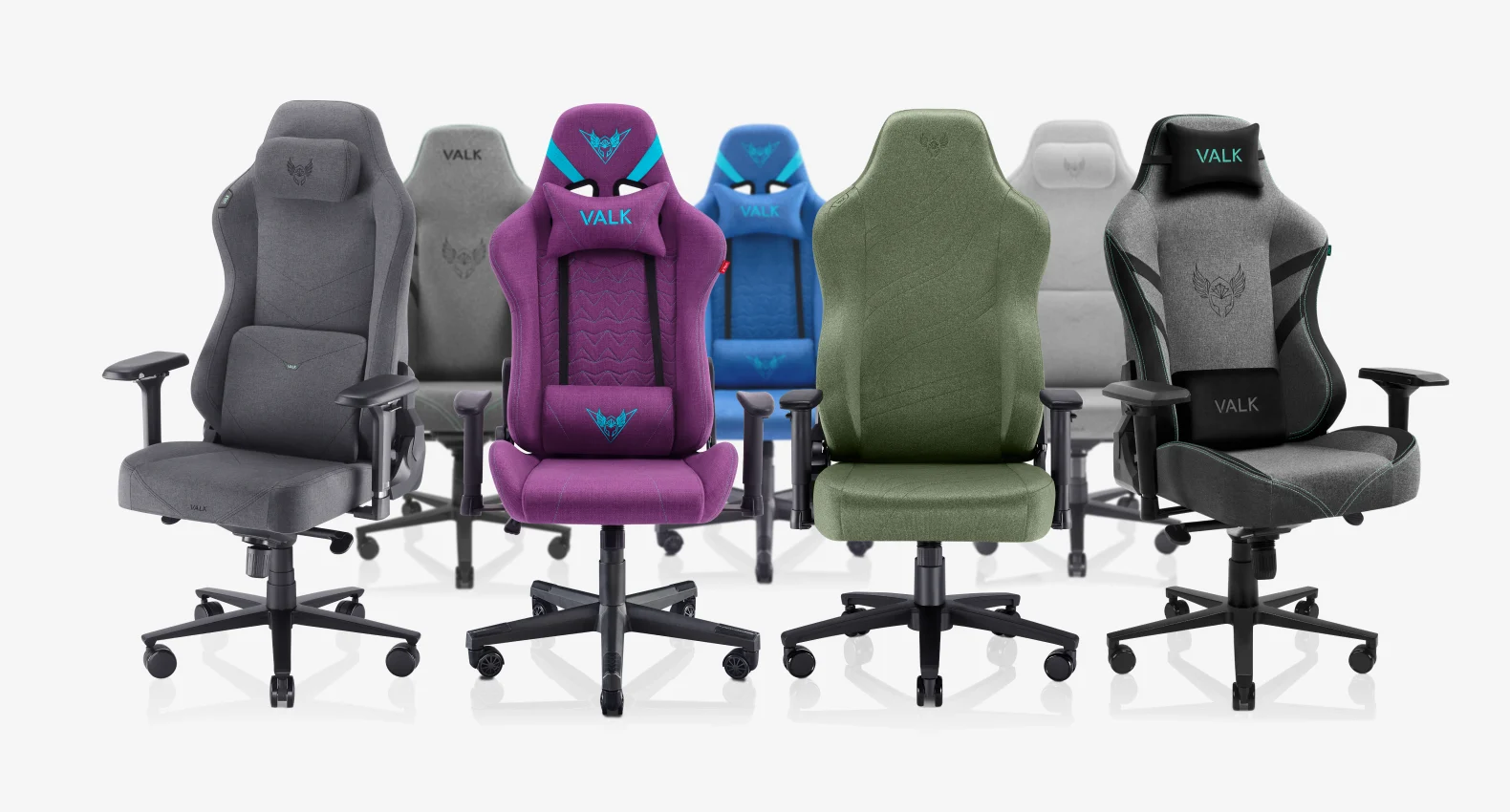
VALKFREYA ELITEFABRIC
-
419.90 €
-
-
-
VALKFREYAFABRIC
-
329.90 €
-
-
-
VALKFREYAPU LEATHER
-
269.90 € 319.90 €
-
-
-
VALKFREYA ZENFABRIC
-
-
-
Coming soon
-
-
-
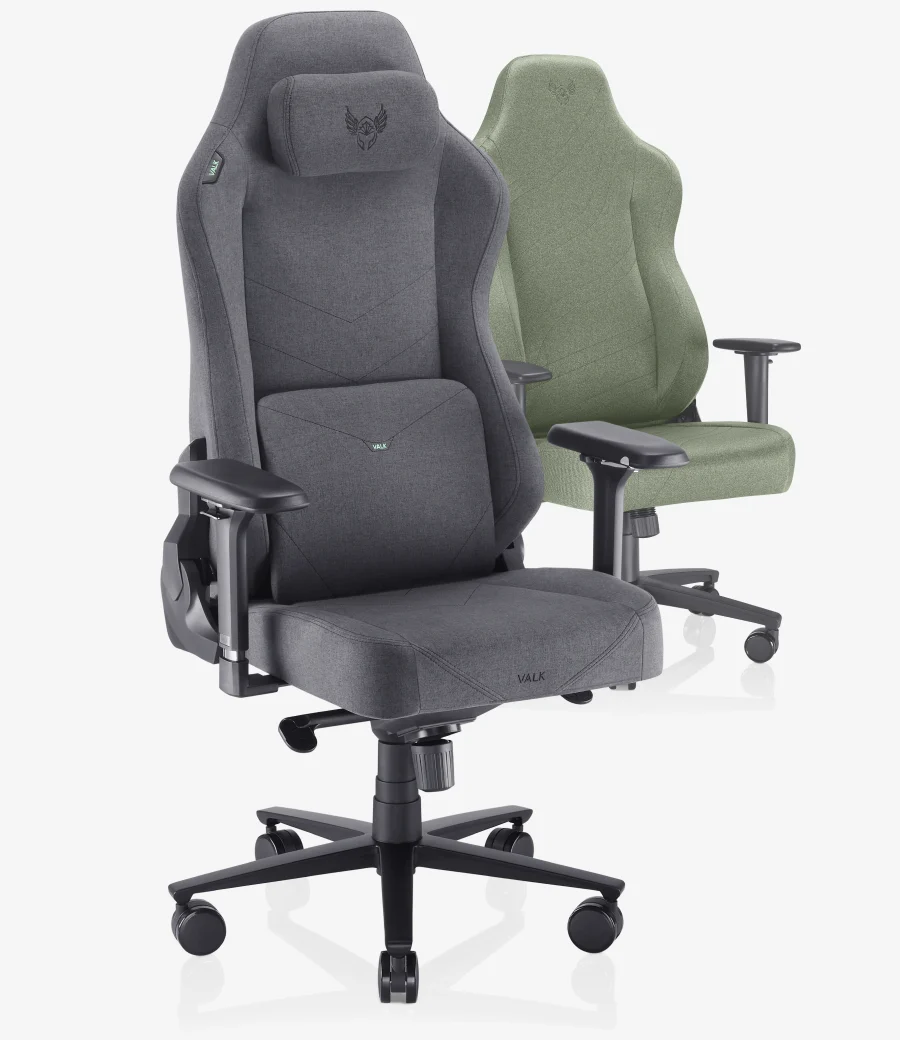
VALKGAIAFABRIC
-
299.90 €
-
-
-
VALKNYXFABRIC
-
169.90 € 219.90 €
-
-
-
VALKNYXPU LEATHER
-
159.90 € 209.90 €
-
-
-
-
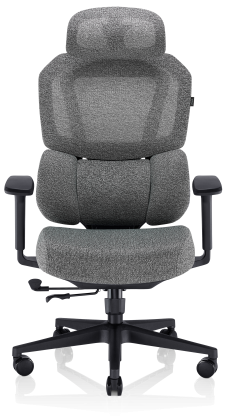
VALKMYLAMESH
-
399.90 €
-
-
-
VALKNOMA OFFICEMESH
-
279.90 €
-
-
-
VALKNOMAMESH
-
249.90 € 299.90 €
-
-
-
VALKNEIRAMESH
-
-
229.90 €
-
-
-
Tables
-
-
-
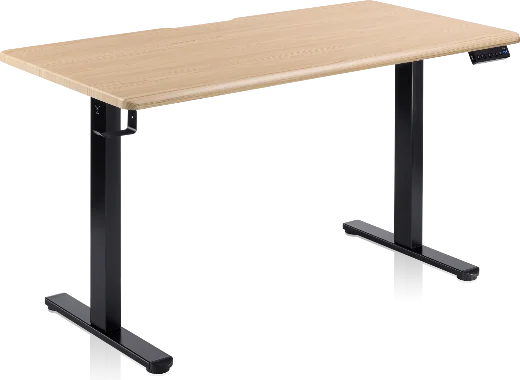
VALKVORNA
-
-
399.90 €
-
-
-
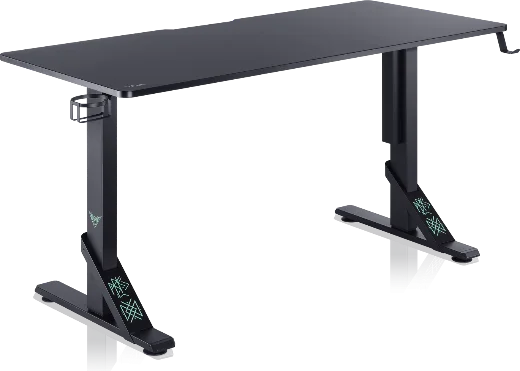
VALKSKULD
-
-
199.90 €
-
-
- Accessories
- Spare parts
-
Info
-
-
THE KEYS TO SUCCESS
-
-
FOR CONTENT CREATORS
-
-
STEAM GIFT CARD
-
-
NEWS, UPDATES, TIPS AND MORE
-
-
Support
-
-
FREQUENTLY ASKED QUESTIONS AND ASSISTANCE
-
-
OF PRODUCT
-
-
LEGAL TERMS
-
-
STEPS TO FOLLOW
-
ERGONOMIC CHAIRS
Ergonomic chairs with a breathable mesh backrest for desk, office and remote work, designed in Europe. This is the part of the range that adjusts to the millimetre: lumbar support, sliding seat, adjustable armrests and synchro mechanism.
- Flextex breathable mesh
- Recommended height 165 to 195 cm
- 4D armrests
- Adjustable backrest and seat
- TriaWeave™ breathable mesh
- Recommended height 165 to 190 cm
- 3D armrests
- Depth-adjustable seat
- Breathable mesh
- Recommended height 165 to 190 cm
- 3D armrests
- Depth-adjustable seat
- Breathable mesh
- Recommended height 165 to 190 cm
- 3D armrests
- Depth-adjustable seat
COMPARE OUR VALKYRIES
If you want the one that adjusts the most, with adaptive lumbar support, 4D armrests and an integrated footrest, MYLA.
If you prefer a softer foam seat, with a height-adjustable mesh backrest, NEIRA.
If you want mesh on the seat too and an aluminium base, in understated grey, NOMA OFFICE.
And if you want the same but with more character, in black with an aqua menthe frame, NOMA.
Swipe to see all the features →
| Model | Colours | Available materials | Max. load | Recommended height * | Seat height | Seat depth adjustment | Lumbar support | Headrest | Footrest | Backrest | Armrests | Recline | Mechanism | Base and casters |
|---|---|---|---|---|---|---|---|---|---|---|---|---|---|---|
MYLA![]() |
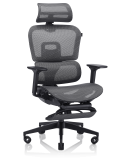
| Flextex™ breathable mesh | 130 kg | 165 to 195 cm | 48 to 56 cm, without pressing the mesh | Yes. 4 positions, up to 5 cm | Adaptive. Adjusts itself to your weight and posture, with no controls or knobs | 3D adjustable + coat hanger | Mesh, integrated. Folding and adjustable in 4 positions | Height-adjustable in 12 positions | 4D adjustable. Reversible | Up to 135°, synchronised with the seat up to 15° | Professional synchro, with integrated side buttons. Adjustable rocking tension with lock | 650 mm aluminium base, 60 mm polyurethane designer casters |
NEIRA![]() |
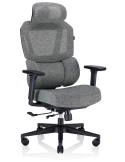
| TriaWeave™ breathable mesh. Double-layer cold-moulded foam seat, 55 kg/m³ | 120 kg | 165 to 190 cm | 45 to 53 cm | Yes. 4 positions, up to 4 cm | Adjustable in 4 positions | 3D adjustable | Not included | Height-adjustable in 10 positions | 3D adjustable | Up to 135°, synchronised with the seat up to 10° | Professional synchro. Adjustable rocking tension with lock | 660 mm nylon base, 60 mm polyurethane casters |
NOMA OFFICE![]() |
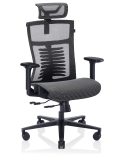
| Breathable mesh | 120 kg | 165 to 190 cm | 46 to 54 cm, without pressing the mesh | Yes. 4 positions, up to 4 cm | Adjustable in 4 positions | Adjustable in height and tilt | Not included | Fixed height | 3D adjustable | Up to 135°, synchronised with the seat up to 10° | Professional synchro. Adjustable rocking tension with lock | 700 mm aluminium base, 65 mm polyurethane casters |
NOMA![]() |
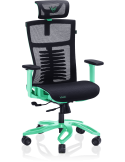
| Breathable mesh | 120 kg | 165 to 190 cm | 46 to 54 cm, without pressing the mesh | Yes. 4 positions, up to 4 cm | Adjustable in 4 positions | Adjustable in height and tilt | Not included | Fixed height | 3D adjustable | Up to 135°, synchronised with the seat up to 10° | Professional synchro. Adjustable rocking tension with lock | 720 mm aluminium base, 75 mm polyurethane casters |
Note:* Heights are a guide. What decides it is not how tall you are, but the distance from the floor to the back of your knee, and that varies between people of the same height. The test is to sit down: if your whole foot rests on the floor with your knee at a right angle, the height is right for you. We explain it in detail in how to choose an ergonomic chair.
If it is too high for you, the OSMA footrest solves most cases, and MYLA already has one built in. Gas lifts and the rest of the parts are available in spare parts.
HOW TO CHOOSE AN ERGONOMIC CHAIR
THE LUMBAR SUPPORT
Good lumbar support is recognised by where it supports, not by how much it sticks out. It has to sit in the curve of your lower back, roughly at belt height, and stay there when you recline. If it is a fixed bulge that does not match your back, it is decoration.
There are two ways to get it right, and both are in the range. Adjustable, as on NEIRA, NOMA OFFICE and NOMA, where you choose between four positions until you find yours. And adaptive, as on MYLA, which adjusts itself to your weight and posture, with no controls or knobs, and also moves up and down with the backrest when you change its height.
That is the real difference between a chair with lumbar support and a chair that claims to have it: whether the support moves to your back or whether you are the one who has to sit awkwardly to find it.
MESH OR FOAM ON THE SEAT
Mesh is not a matter of office aesthetics: air passes through it, and your back does not end up stuck to the chair after a July afternoon. That is why all our ergonomic chairs have it on the backrest. Where they differ is the seat.
Mesh. It is the coolest option, because it also ventilates from below. MYLA uses Flextex, a mesh with more elastic travel and better recovery.
Foam. It is softer and spreads pressure better when you spend many hours sitting. What decides whether it lasts is density: below 30 kg/m³ it sinks within months. NEIRA has double-layer cold-moulded foam at 55 kg/m³.
In a sentence: if your problem is heat, mesh. If it is seat comfort after hours, foam. And if you are torn between mesh and fabric, we compare them in mesh chair or fabric chair.
THE ADJUSTMENTS YOU ACTUALLY USE
A chair with twenty adjustments you never touch is no more ergonomic than one with five that are well designed. These are the ones you will use.
Seat height. The adjustment most people skip. It is not decided by how tall you are but by the distance between the sole of your foot and the back of your knee. If the seat is higher, you end up with your feet dangling or the edge pressing into your thigh. We go into it in choosing the right chair for your height and weight.
Seat depth. The sliding seat is there so that two fingers fit between the front edge and the back of your knee. If the seat is too deep, you sit forward and lose the backrest. If it is short, your thigh is left without support. Every model has it.
Backrest height. MYLA adjusts it in twelve positions and NEIRA in ten. It is not a luxury: it is what lets you line the lumbar support up with your back instead of settling for whatever comes from the factory.
Armrests. Three adjustments are enough to work with your elbow at ninety degrees. With four you fine-tune further, and on MYLA they can also be fitted crossed over to move the support back and get closer to the desk.
Synchro mechanism. It is what sets an ergonomic chair apart from a normal desk chair. When you recline, the backrest and the seat move together in different proportions, so your back keeps contact and no gap opens up in the lumbar area. Every model has it.
LONG DAYS, REMOTE WORK AND STUDYING
The best posture is the next one. Eight hours fixed in the perfect position is more tiring than shifting around, which is why it matters as much that the chair moves with you as that it supports you.
In practice it comes down to three things. Free rocking with the tension set to your weight, so you can lean back without feeling the chair is getting away from you. Locking at the tilt you use for typing, which is usually a couple of degrees and not strictly upright. And feet supported, on the floor or on a footrest: MYLA has its own built-in, folding one, and for the rest there is the OSMA footrest.
Desk height is part of the equation. If the armrests do not fit under the desktop, you will not be able to pull in, and if the desk is high you will end up with hunched shoulders all day. That is why VORNA goes up and down at the touch of a button, and SKULD can be assembled at three heights.
For studying it is the same equation with fewer breaks and more hours in a row, so all of the above matters more, not less.
WORKING AND PLAYING AT THE SAME DESK
If you are looking for a desk chair for gaming, the question is not which of the two families is better. It is what you spend more hours doing and in what posture, because the chair cannot tell a spreadsheet from a match. It can tell sitting upright from lying back.
When you work you sit upright. Back against the backrest, forearm supported, eyes on the monitor, for six or seven hours. That is where an ergonomic chair clearly wins: it ventilates, the lumbar support works the whole time in the same position, and the fine adjustment makes up for every centimetre of your body. And since keyboard-and-mouse gaming is that same posture, even a little further forward, the chair that works for working works for playing without changing anything.
When you play with a controller you lie back. Backrest reclined, head supported, sometimes with your feet up and a series on in the background. That is where a gaming chair responds better: the backrest is higher and reclines up to 160 degrees, and the high-density foam copes better with the spread weight when you go from sitting to lying back.
The line is fairly clear. If your desk is mainly a work desk and your gaming is keyboard and mouse, an ergonomic chair. If your gaming is controller, console or reclining all the way, the gaming family fits better. And if you are right in the middle, MYLA is the one that comes closest to both: 3D adjustable headrest, recline up to 135 degrees in five positions and an integrated footrest.
We compare them in detail, with both postures and their measurements, in gaming chairs vs office chairs.


FREQUENTLY ASKED QUESTIONS
What is the difference between an ergonomic chair and a gaming chair?
The posture they are designed for. The ergonomic one has a mesh backrest, ventilates and is made for sitting upright for many hours with fine adjustment. The gaming one is upholstered foam in fabric or faux leather, with a higher backrest and recline up to 160 degrees, designed for leaning back. Both can be ergonomic: it comes down to the number of adjustments, not the shape.
Is a mesh chair good for gaming?
Yes, and quite well if you play with keyboard and mouse. That posture is almost the same as working, so the chair that works for one works for the other, with the advantage that mesh ventilates better in long sessions. Where it falls short is playing with a controller and reclining a lot, because it does not have the high backrest or the foam that position calls for.
How do I know if a chair’s lumbar support is good?
By where it supports, not by how much it sticks out. It has to sit in the curve of your lower back, roughly at belt height, and stay there when you recline. If it is fixed and does not match your back, it is doing nothing. On NEIRA, NOMA OFFICE and NOMA it adjusts in four positions, and on MYLA it is adaptive. On MYLA and NEIRA it also moves up and down with the backrest.
Does mesh sag over time?
No, if it is of good weight and properly tensioned on the frame. The mesh that sags is cheap or poorly tensioned mesh: after a few months it bags and stops supporting where it should.
Are there spare parts if a part breaks?
Yes. First check your warranty: it is 3 years and the part may be covered. If not, in spare parts you will find casters, gas lifts, armrests, mechanisms and screws, original and affordable because we make them ourselves. Compatible with your chair and with many other brands on the market.
MYLA, NEIRA, NOMA OFFICE or NOMA, which should I choose?
MYLA if you want full adjustment: adaptive lumbar support, 4D armrests and an integrated footrest. NEIRA if you prefer a softer foam seat, with a height-adjustable mesh backrest. NOMA OFFICE and NOMA are the same chair in two finishes, with mesh on the seat too and an aluminium base: they share seat, backrest and measurements, and differ in colour, base size and casters. OFFICE in understated grey, NOMA in black with an aqua menthe frame. All of them are compared adjustment by adjustment in the table.